The Things She’ll Never Remember
I try not to think about the last time. I think about this time.
· September 12, 2026 · 4 min

My daughter will not remember the first apartment she lived in, which seems unfair mostly because I suspect I will remember almost everything about it. I’ll remember the corner where we kept her stroller and the increasingly elaborate maneuver required to get around it. I’ll remember eating dinner quietly because she had finally fallen asleep and treating the successful transfer from arms to crib with the concentration of a bomb technician working on a live wire. I’ll remember the sound machine through the wall and the strange intimacy of knowing that another person was asleep simply because, for once, you could not hear her.
She will remember none of this. She won’t remember the restaurants where we learned which foods she liked by watching most of them fall to the floor, or being carried home asleep, her head in the narrow space between my shoulder and neck. She won’t remember the books we read so many times that I could recite them without looking at the page. She won’t remember the first snow, the first trip to the ocean or the Saturday morning when she insisted on walking all the way to get a bagel and then refused to eat it.
This is one of the stranger arrangements of early parenthood: some of the most vivid years of your life take place before the other main character has begun keeping records. You spend an enormous amount of energy constructing a childhood for someone who will retain almost none of its individual days.
At first, this can make the days feel unusually consequential. Parents are constantly being encouraged to “make memories,” a phrase that has launched countless expensive vacations and probably an equal number of arguments in hotel rooms. We photograph the Christmas morning, buy tickets to the thing they are supposedly going to love and ask them to smile when they would rather inspect a crack in the sidewalk. Part of this is affection. Part of it, I think, is our awareness that childhood is disappearing at exactly the same speed it is happening.
But there is something reassuring in the fact that she will forget so much. A two-year-old does not need a memorable Saturday. She needs a good one.
A good Saturday can be almost aggressively ordinary: breakfast, a playground, a walk for coffee, twenty minutes spent examining something on the sidewalk that an adult would not have noticed. Maybe there is a nap when the nap is supposed to happen, which at this age qualifies as an extraordinary stroke of fortune. There is no landmark and nothing worth posting. By Sunday, even I may have trouble distinguishing it from the Saturday before.
And yet these ordinary days seem to accumulate somewhere. Children may forget being picked up when they cried, but perhaps they keep the expectation that somebody comes. They forget the hundreds of walks around the neighborhood, but keep a sense that the world is interesting and safe enough to explore. They forget sitting at the table while adults talked around them, but slowly absorb that this is their table too.
Memory, in other words, is only one way an experience survives.
That idea has changed the way I think about these years. It lowers the stakes of individual moments while raising the stakes of ordinary life. I do not need to manufacture magic for my daughter, and she does not need me to turn every weekend into an event. What she needs, much more often, is for me to be there.
Someday she will have her own version of this period, assembled from photographs, family stories and whatever mythology we create through repetition. She will know that she demanded the same song every morning because we will tell her. She will know that she mispronounced a particular word because we loved the mistake too much to stop repeating it. She will recognize the stuffed animal that appears, increasingly filthy, in hundreds of photographs.
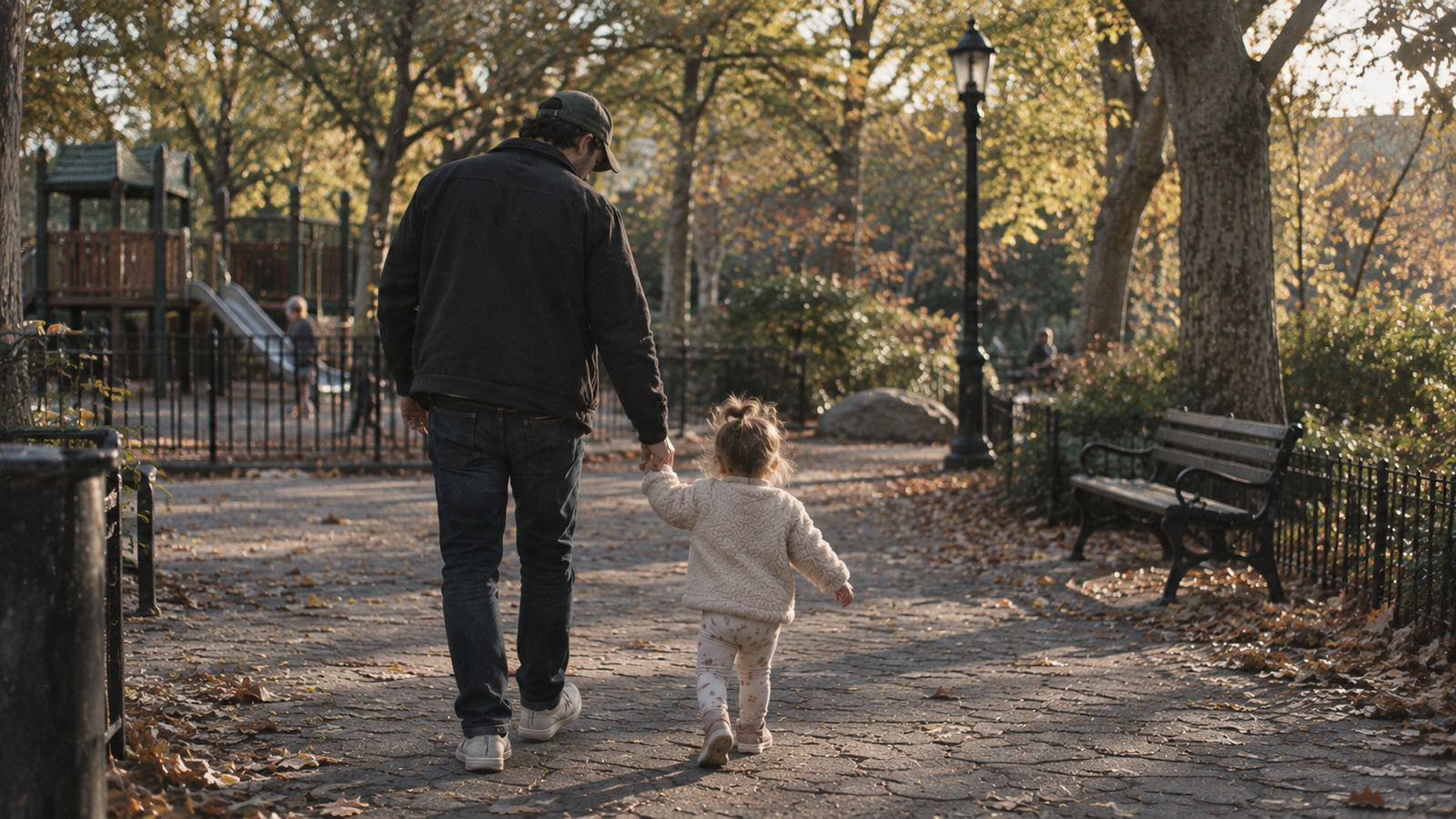
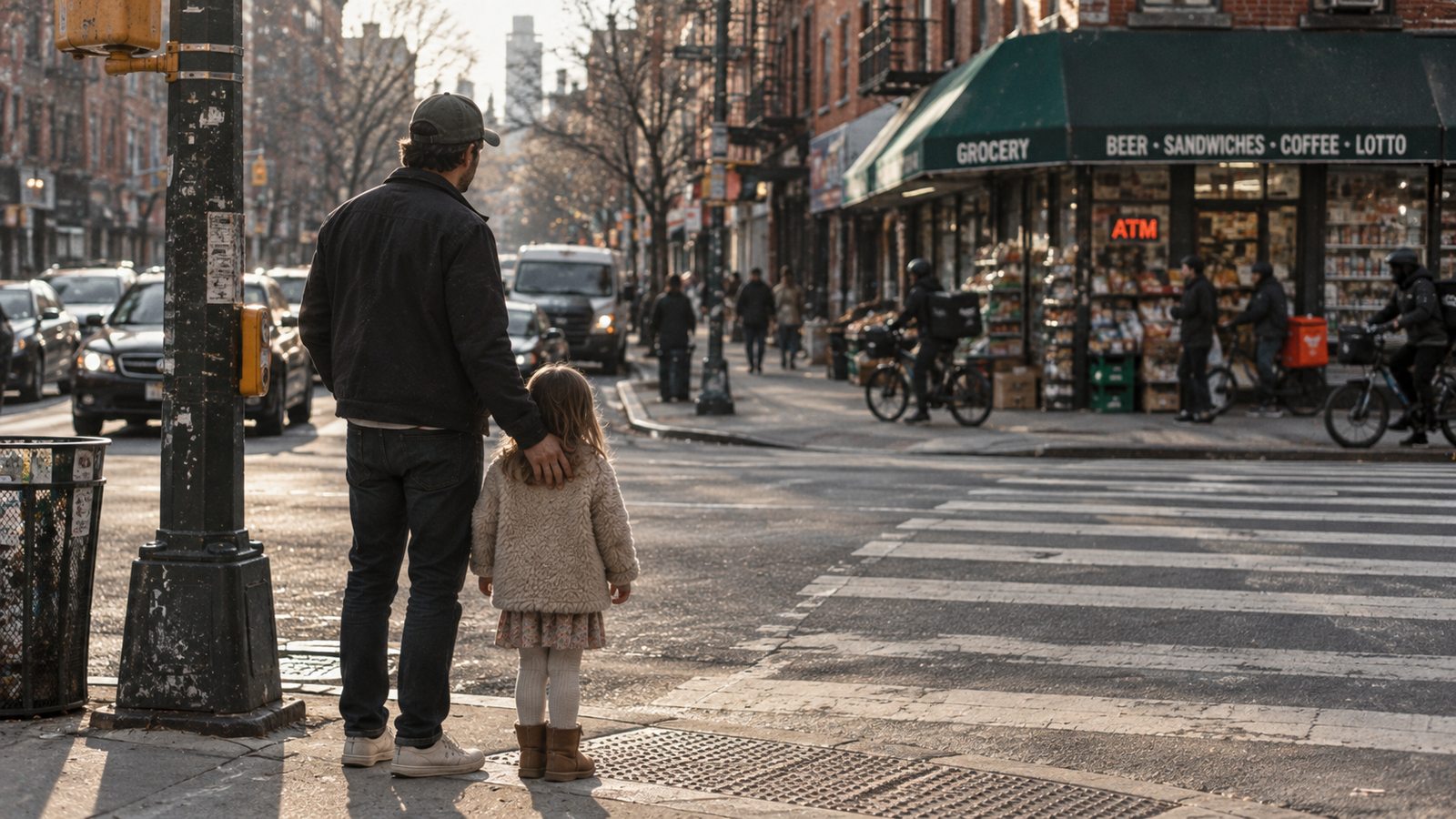
The things I suspect I’ll miss most will be harder to document. The weight of her when I pick her up half-asleep. Her hand reaching automatically for mine at a curb. The way she calls my name from another room, not because anything is wrong, but apparently because she wants confirmation that I still exist.
Parents are frequently reminded that one day there will be a last time for these things. A last time carrying her upstairs, a last time she asks to hold my hand, a last time she needs help putting on a shoe. This is true, but I’m not sure it is particularly useful. Thinking constantly about the future loss of the present is an odd way to inhabit a life.
So I try not to think about the last time. I think about this time.
She is here. She wants to be carried. We are going somewhere completely ordinary, and tomorrow she probably won’t remember it.
I will.
keep reading
The Person You Were Before You Became Dad
Fatherhood changes your life. It doesn't require surrendering the person who had one before it.
The Long Way Home
Once you stop measuring a walk by how quickly you get somewhere, a neighborhood begins to look very different.
Welcome to The Girl Dad
She thinks you're the coolest person alive. Act accordingly.